
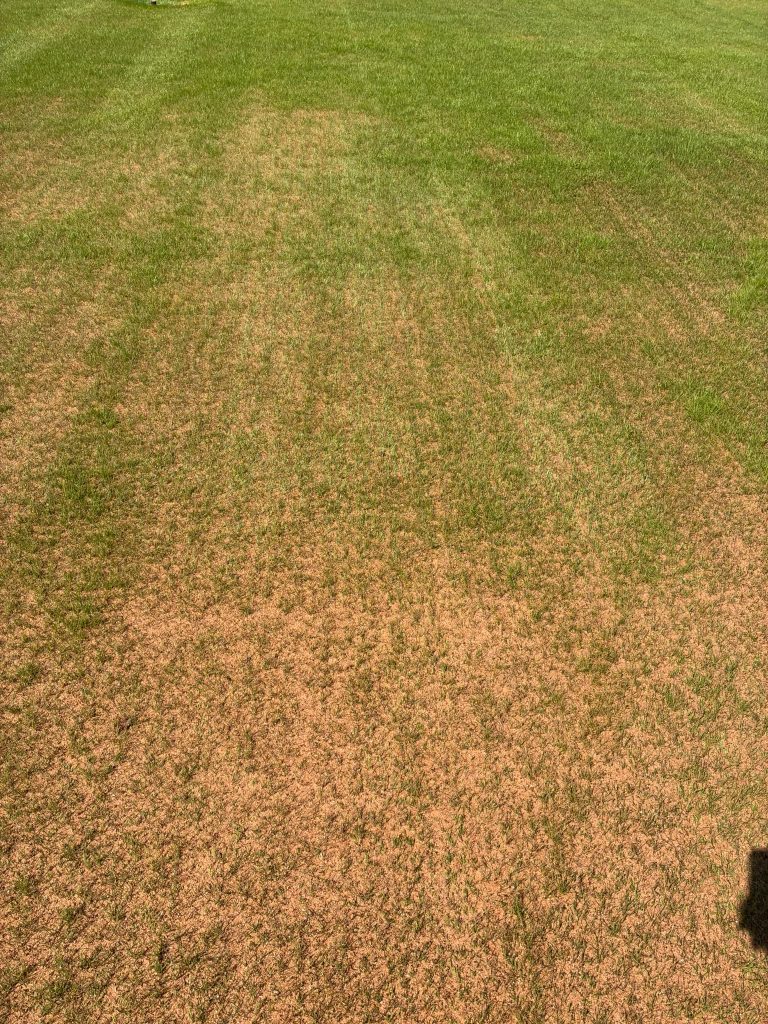
Drought and Your Lawn
With the current dry spell (and any hosepipe restrictions in your area), you might expect us to skip your lawn treatment altogether. We’re not — but what we’re doing, and why, is worth explaining.
Your lawn’s brown, but it’s not thirsty in the way you think
In a drought, grass shuts down growth to survive — it’s not wilting for water minute-to-minute, it’s gone dormant on purpose. The roots are alive and waiting. The risk isn’t that the lawn is “dying of thirst” right now; it’s that it comes out the other side of the drought patchy, weak, and open to weeds if it’s had no support while it waited.
Why H-Cote still makes sense in a drought
This is actually where our H-Cote feed earns its keep. It’s a coated, slow-release nitrogen fertiliser triggered by soil temperature rather than needing to be watered in immediately:
- It doesn’t need rain right away to start working — it sits in the soil and releases gradually as conditions allow, so nothing is wasted if dry weather continues.
- Because it releases slowly over 3–4 months rather than all at once, there’s no risk of overloading dormant grass with nutrients it can’t use yet — unlike a fast-release feed, which either washes away or forces growth the lawn can’t sustain without water.
- It means the nutrient bank is already in place the moment rain returns, so the lawn can respond and green up immediately instead of you waiting weeks for the next scheduled feed.
Why we’re still spot-treating weeds, not the whole lawn
Weeds are far more drought-tolerant than turf grass, so they’re often the only thing still actively growing right now — which makes this a good time to catch them, not a reason to wait:
- We only treat the weeds that are visibly active, so we’re not adding any stress to grass that’s already dormant.
- Left alone during a drought, weeds get a head start and can spread into the bare, weak patches that appear once the drought breaks — so this is preventative, not cosmetic.
What we’re not doing
We’re not applying anything that requires you to water it in, and we’re not increasing volumes — this is a lighter-touch, precision approach for the conditions, not business as usual.
What you can do
Avoid mowing too short, and don’t panic if the lawn looks worse before the rain comes back — that’s the plant protecting itself, not a sign something’s gone wrong. Once rain returns, you should see faster, more even recovery than an untreated lawn.